
Finding Your Way Through the System After a Mobility Change
After a fall, illness, surgery, hospitalization, or sudden change in mobility, families are often introduced to a system they may not fully understand.
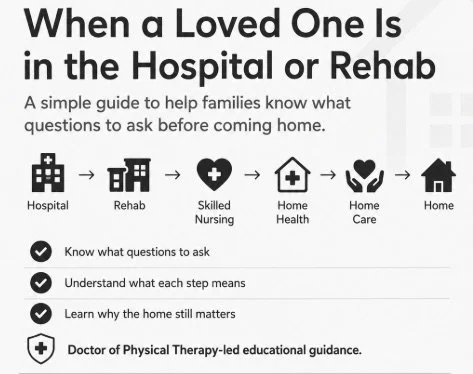
Hospital discharge. Rehab. Skilled nursing. Home health. Home care. Equipment. Therapy. Safety concerns. Returning home.
Each piece may have a role, but it can be hard to know what each one means, what questions to ask, and how the home fits into the bigger picture.
This guide is a simple starting point to help families understand the road home and ask better questions along the way.
Download the What Happens Next? Family Guide
A simple one-page guide to help families understand hospital discharge, rehab, skilled nursing, home health, home care, and the questions to ask before coming home.
The Goal Is Not to Know Everything at Once
When someone’s mobility changes, families often feel pressure to make quick decisions.
Where are they going next?
What services are involved?
What equipment is needed?
Is the home ready?
Who is responsible for helping us figure this out?
You do not have to understand the entire system all at once.
Start by asking the right questions at each step. The answers can help you understand what is happening now, what may be coming next, and what needs to be prepared before returning home or staying safely at home.
How Mobility Changes Can Affect the Road Home
A mobility change does not only affect walking. It can affect bathroom access, stairs, transfers, equipment use, caregiver help, and how safely daily routines work at home.
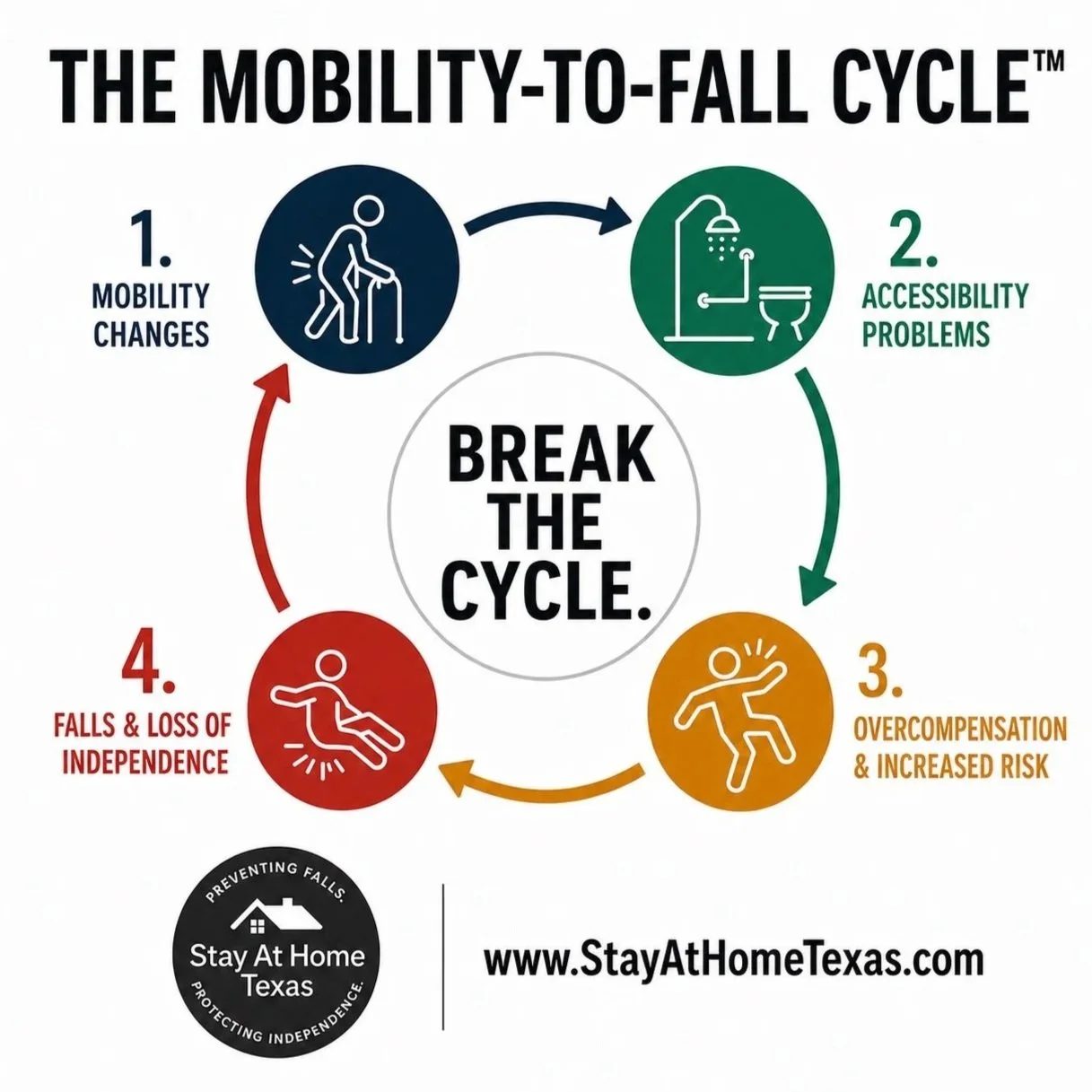
The Mobility-to-Fall Cycle™ shows how mobility changes can create accessibility problems, unsafe workarounds, increased fall risk, and loss of independence.
Hospital Discharge
Hospital discharge is when the hospital decides your loved one is ready to leave the hospital setting.
They may go home, or they may go somewhere for more support before returning home.
Questions to ask:
Where are we going next?
What do we need to bring or prepare before we leave?
How long should we expect them to stay there?
Who should we contact if something does not seem safe or clear once we leave?
Rehab Facility
A rehab facility may help someone work on strength, walking, balance, transfers, endurance, and daily function before returning home.
This may be part of the step between the hospital and home.
Questions to ask:
What will therapy look like each day?
What do we need to be preparing for next?
What needs to improve before returning home safely?
Who is helping us understand what home will need to look like when they leave?
Skilled Nursing Facility
A skilled nursing facility may provide nursing care, therapy, and added support when someone is not ready to return home immediately.
Some people stay for a short time while they recover and prepare for the next step.
Questions to ask:
What still needs to improve before home is realistic?
How often will they receive therapy or support?
Who is helping us plan for the return home?
What concerns should we be preparing for before discharge?
Home Health
Home health is care that comes to the home when ordered by a healthcare provider.
It may include nursing, physical therapy, occupational therapy, speech therapy, or other support depending on the person’s needs.
Questions to ask:
What services were ordered?
How often will someone come to the home?
What should we still be watching for between visits?
Who should we call if the home does not feel safe or manageable between appointments?
Home Care
Home care is different from home health.
Home care usually means non-medical help in the home, such as bathing, dressing, meals, reminders, companionship, supervision, errands, or daily routines.
Questions to ask:
Do you have a minimum number of hours?
What gaps in care can you help fill?
How long will we likely need extra support?
What tasks can your caregivers help with, and what tasks are they not allowed to do?
Home Mobility Planning™
Home Mobility Planning™ helps families understand how mobility changes affect safety, accessibility, caregiver help, and daily life at home.
This is where the road home connects back to the house itself.
Questions to ask:
Does the home support the way they move now?
What needs to change before they return home or stay safely at home?
Are there concerns with bathroom access, stairs, transfers, walking paths, equipment, or caregiver space?
Who can help us understand what changes are actually needed before we spend money?
Why the Home Still Matters
A person may be ready to leave the hospital, rehab, or skilled nursing setting, but the home may still create real challenges.
Bathrooms, stairs, transfers, walking paths, equipment, and caregiver space can all affect whether daily life at home feels safe and manageable.
When mobility changes, the home may stop working the same way.
That is why planning matters before families make rushed decisions about equipment, grab bars, remodeling, or returning home.
Home Mobility Planning™ Checklist
Use this checklist to start identifying areas of the home that may need discussion, observation, or planning before returning home or making changes.
Need Help Understanding the Home Piece?
The healthcare system may help families understand care, therapy, discharge, and support services. But families are often still left asking whether the home itself is ready.
Stay At Home Texas provides Doctor of Physical Therapy-led Home Mobility Planning™ consultations for families preparing for life at home after a mobility change, illness, injury, hospitalization, or rehab stay.
We look at how the home supports or limits safety, accessibility, caregiver help, and daily function.
We do not sell products.
We do not perform construction.
The goal is to help families know what may need attention before they spend money or make rushed decisions.
Or text/call (713) 364-5063

For more information, these related guides may help:
Home Safety After Rehab
What families should consider when someone is preparing to return home after rehab or hospitalization.
Home Health vs Home Care
Understand the difference between skilled medical services, non-medical caregiver help, and where the home environment fits in.
The Mobility-to-Fall Cycle™
Learn how mobility changes can create accessibility problems, increase fall risk, and affect independence at home.
Aging in Place in Houston
A guide for families planning ahead for safer, more accessible daily living at home.
Home Access and Wheelchair Ramps
What to consider when entryways, steps, or wheelchair access become a concern.