
Aging in Place Is the Goal. The Home Has to Support the Person
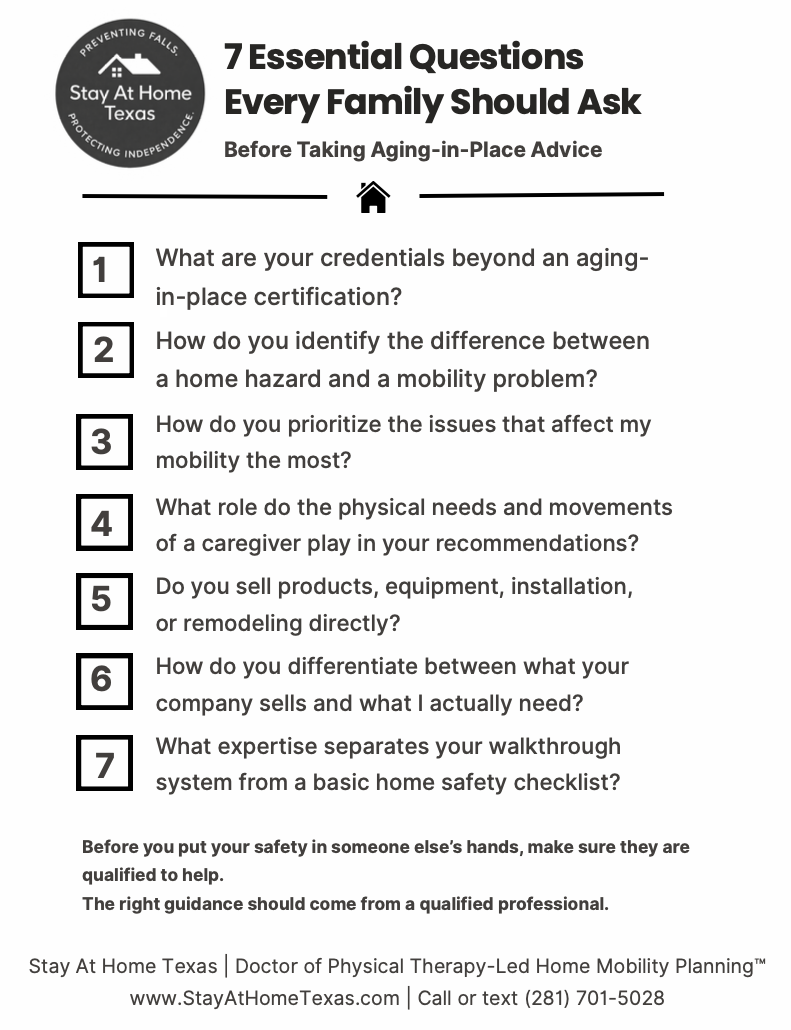
Aging in place is not just about staying home. It is about making sure the home still works as mobility, balance, strength, caregiver needs, and daily routines change.
Most homes are not designed around long-term mobility. A shower, toilet, entryway, staircase, hallway, or walking path that once felt normal can become harder, riskier, or less realistic over time.
That is where Home Mobility Planning™ comes in.
We help Houston families understand what may need to change at home before they spend money on equipment, remodeling, or rushed home changes.
Aging in Place Takes the Right Guidance
Many people think aging in place means staying in the same house forever.
But aging in place can happen in different living environments: a private home, apartment, family member’s home, assisted living setting, or another place someone calls home.
The real question is whether that environment supports the person’s current mobility, safety, caregiver needs, and daily routines.
Aging in place often takes a team. Family, physicians, therapists, home health, home care, contractors, equipment providers, and caregivers may all play a role.
But the environment still has to work for the person living in it.
Home Mobility Planning™ helps families understand whether the space supports real daily movement, independence, caregiver support, and long-term function.
Every home creates different challenges as mobility changes.
The problem may be:
• A shower that is hard to enter
• A toilet that is difficult to use safely
• Stairs that no longer feel manageable
• Narrow spaces that do not work with a walker or wheelchair
• Poor lighting or flooring transitions
• A layout that makes caregiver help difficult
These problems are not always obvious at first.
Home Mobility Planning™ helps families understand which parts of the home are no longer supporting daily movement, safety, accessibility, or independence.
Why Aging in Place Looks Different in Houston Homes
Aging in Place Is the Goal. But the Home Has to Work.
Home care, home health, therapy, family support, equipment, and remodeling may all play a role in aging in place.
But none of those supports work as well if the home no longer fits the person’s mobility.
If the shower is hard to enter, the toilet is difficult to use, the stairs are unsafe, the entryway is a barrier, or a caregiver cannot safely help, the home itself becomes part of the problem.
That is why aging in place starts with understanding how the person moves through the home — and what needs to change so the environment can better support safety, accessibility, independence, and daily life.
Home Mobility Planning™ Helps You Decide What Matters First
Aging in place does not mean changing everything at once.
It means understanding which parts of the home no longer support daily movement, safety, accessibility, caregiver help, or independence.
Sometimes the right next step may be a grab bar, ramp, shower change, lighting improvement, equipment, caregiver support, or a larger modification. Other times, the best decision is knowing what can wait until later.
Home Mobility Planning™ helps families prioritize what matters now, what may need to change later, and what should be understood before money is spent.
How Mobility Changes Affect the Home
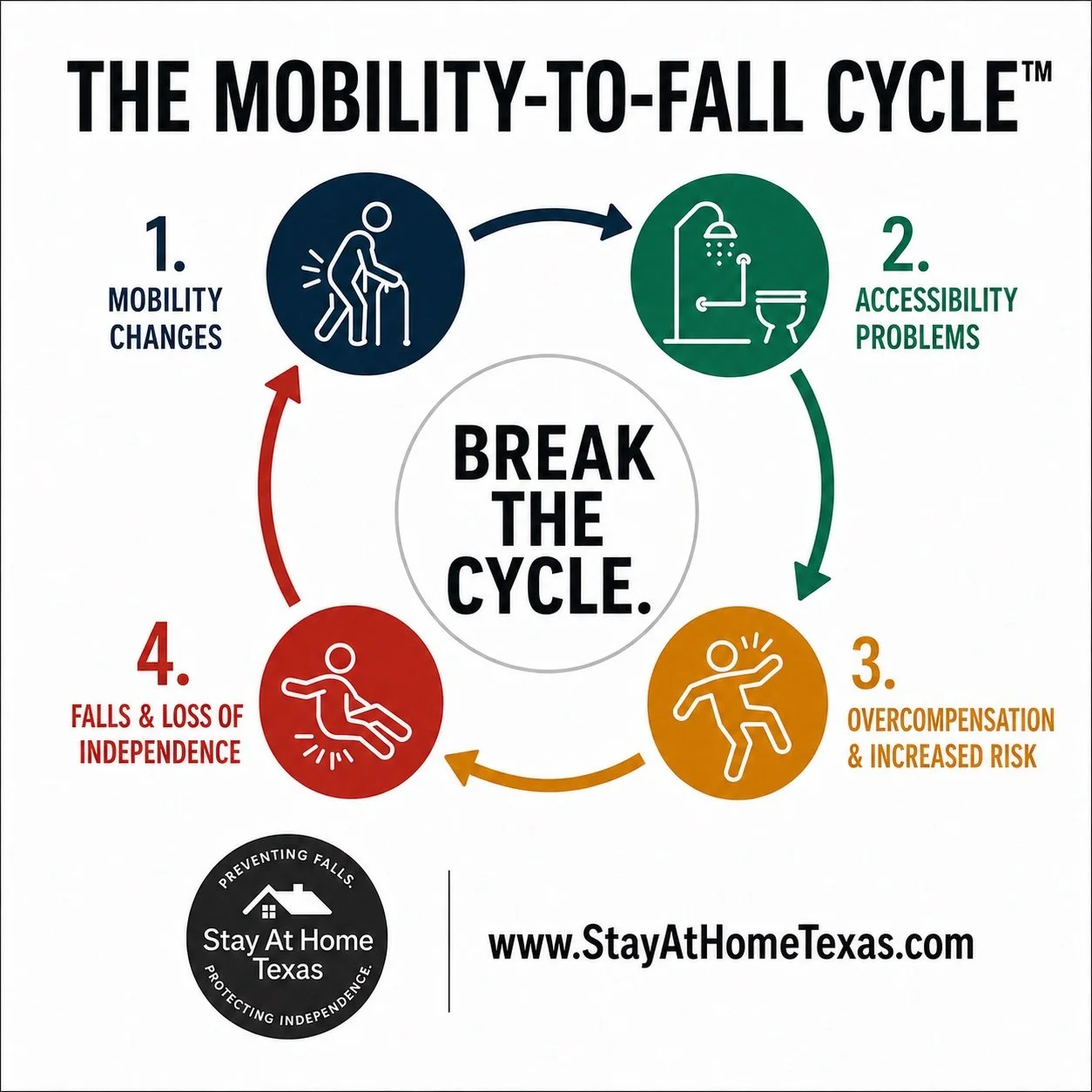
Aging in place becomes harder when the home no longer supports the way someone moves.
As mobility changes, everyday areas like the bathroom, stairs, entryways, walking paths, transfers, and caregiver space can become more difficult to use safely.
Over time, those accessibility problems can increase fall risk and make independence harder to maintain.
This pattern is what we call The Mobility-to-Fall Cycle™.
Aging in Place Takes the Right Team
Aging in place is rarely handled by one person or one service.
Depending on the situation, families may need physicians, therapists, home health, home care, caregivers, equipment providers, contractors, financial guidance, or family support.
The hard part is knowing who you need, when you need them, and which decisions should come first.
Stay At Home Texas helps families understand how the home fits into that larger plan. We help identify what may be needed inside the home so families can make clearer decisions about support, equipment, modifications, and next steps.
Next Steps
Aging in place starts with understanding whether the home still supports the person living in it.
If you are trying to plan for mobility changes, home safety, accessibility, caregiver support, or future modifications, we can help you understand what may need to happen first.
Prefer to talk directly? Call or text Stay At Home Texas at (713) 364-5063
No installation. No product sales. Just doctor-led guidance.
Planning for aging in place often means understanding several connected issues: mobility, fall risk, bathroom safety, home access, and caregiver support.
Explore related resources:
Each guide focuses on helping families make safer, more informed decisions before major changes