
Doctor of Physical Therapy-led tools to help families understand mobility changes, home safety, accessibility, caregiver support, and safer living at home.
Educational Resources for Your Organization
Stay At Home Texas creates practical educational resources for organizations that support older adults, caregivers, rehab discharges, and families navigating changes in mobility.
These resources help families ask better questions about home safety, accessibility, equipment, grab bars, bathroom changes, caregiver support, and returning home after hospitalization or rehab.
We do not sell products.
We do not perform construction.
We do not replace your services.
We help your clients and their families better understand what may need attention at home.
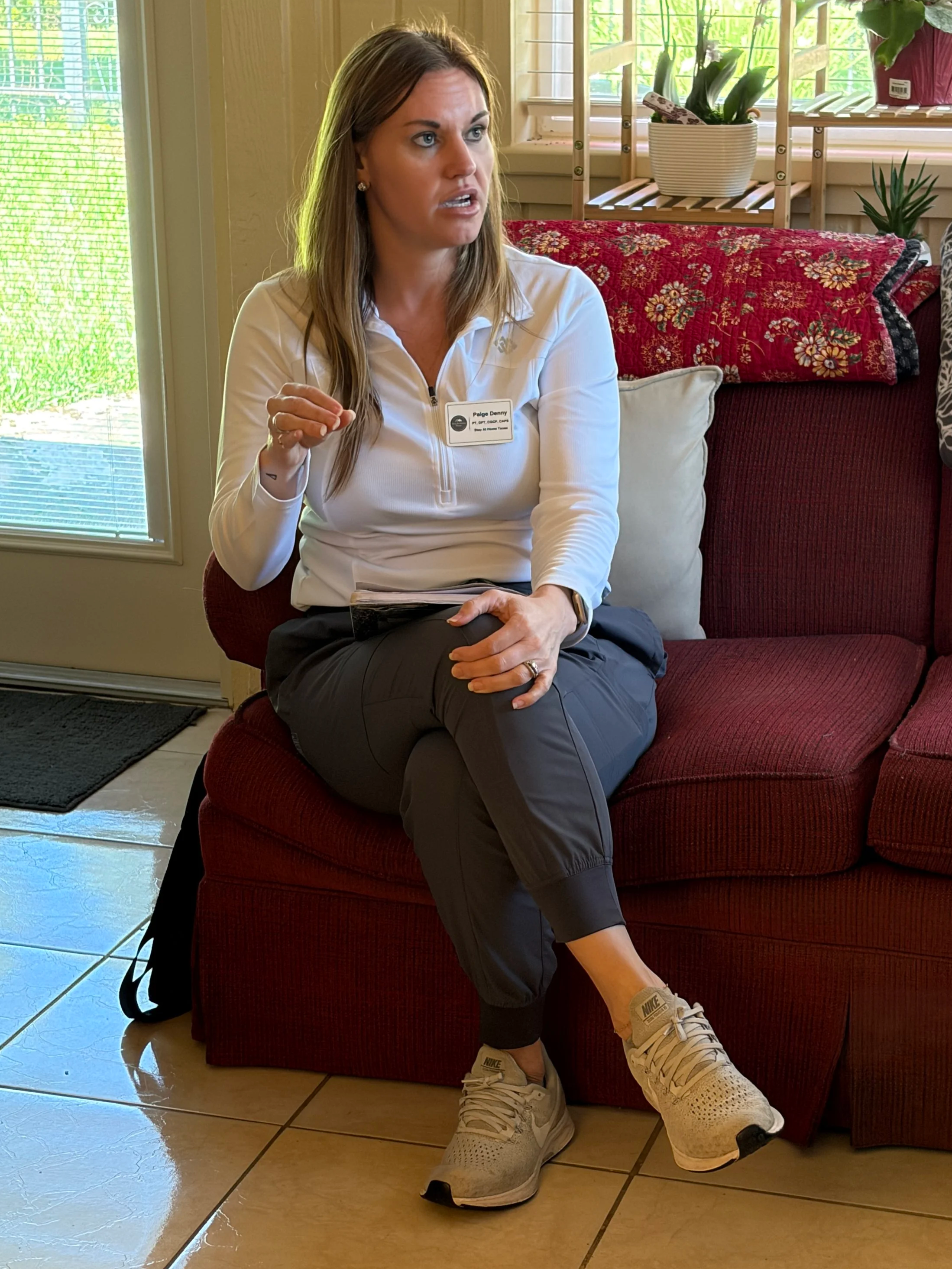
How We Support Your Clients and Your Team
We help organizations give families clearer guidance when mobility, home safety, accessibility, or discharge-related concerns start showing up.
When a client’s needs at home are unclear, Stay At Home Texas can help the family understand how the person is actually functioning in their environment and what areas may need attention first.
We help your organization:
Help families ask better questions before buying equipment or making home changes
Provide educational resources around mobility, accessibility, fall risk, and safer living at home
Support clients who are returning home after hospitalization, rehab, illness, injury, or a mobility change
Reduce guesswork around grab bars, bathroom safety, equipment, caregiver space, and home access
Give families a clearer next step when the home no longer supports daily routines safely
We do not replace your services. We help extend the conversation into the home environment.
Organizations We Support
Stay At Home Texas works with organizations that support older adults, caregivers, rehab discharges, and families navigating mobility changes at home.
We provide educational resources, consultation support, and a trusted next step when families need help understanding whether the home still supports daily function.
Home Care Agencies
Helps families recognize when the home environment may be affecting safety, mobility, and caregiver support.
Provides educational resources your team can share with clients and families.
Gives families a trusted next step when home concerns go beyond scheduled care hours.
Rehab & Discharge Partners
Helps families think through the home before or after discharge.
Supports conversations around bathrooms, stairs, transfers, equipment, and caregiver help.
Gives families clearer questions to ask as they prepare for life at home.
Medical Equipment Providers
Helps families ask better questions before choosing equipment.
Considers whether equipment fits the person, the home, and daily routines.
Reduces mismatches between equipment, mobility needs, and the home environment.
Mobility & Accessibility Companies
Adds clinical insight before projects begin.
Helps align recommendations with mobility, transfers, caregiver space, and long-term function.
Supports better planning before installation or modification decisions are made.
Community & Senior Organizations
Provides practical education around aging in place, home safety, mobility, and accessibility.
Helps families recognize changes early before a crisis forces rushed decisions.
Offers educational tools that can be shared in talks, events, resource tables, or family conversations.
A Resource You Can Share With Families
Help families recognize when the home may no longer support the way someone moves.
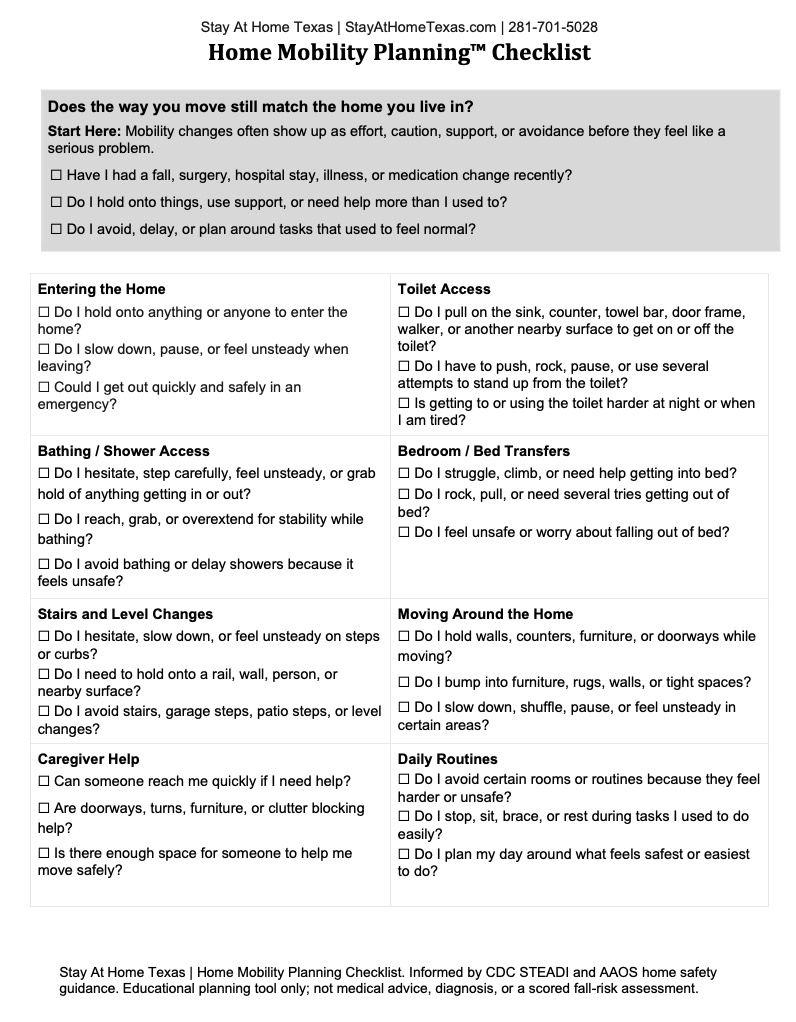
The Home Mobility Planning™ Checklist is an educational conversation guide your organization can share with families after a mobility change, hospital stay, rehab discharge, or concern at home.
It helps families think through common areas like entry access, toilet transfers, shower access, stairs, walking paths, caregiver help, equipment use, and daily routines.
This is not a scored fall-risk assessment. It is a simple planning tool to help families ask better questions before they buy equipment, install grab bars, remodel, or make rushed decisions.
How to Connect With Stay At Home Texas
When a family, client, resident, or patient may benefit from clearer guidance at home, you can send them to Stay At Home Texas or contact us directly to talk through the best next step.
A simple way to refer:
Share our website, introduce us by email, or have the family call or text us directly.
What happens next:
We learn what the family is dealing with, explain whether a Home Mobility Planning™ consultation may be appropriate, and help them understand the next step.
You stay involved if appropriate. We simply provide clarity when the home situation needs more attention.
Call or Text Stay At Home Texas: (281) 701-5028
Email: info@stayathometexas.com