
Know Where Your Grab Bars Need to Go—Before Anyone Installs Them
Grab bar placement should not be a guess.
A bar can be securely installed and still be in the wrong place for the person using it. If the height, angle, length, or location does not match how you actually stand, reach, turn, or transfer, you may spend money on something that does not help—and may make movement more difficult.
During a Doctor of Physical Therapy-led Grab Bar Consultation, we look at how you move in your own bathroom and determine where support should be placed for you.
No generic diagram. No guessing.
You will know where your grab bars need to go before you pay someone to install them.
Learn now this is one part of a larger home accessibility and safety plan.
If we cannot help you, we will get you to someone who can.
Grab Bar Placement Is Personal
A grab bar can be installed correctly and still be placed incorrectly for you.
Placement should reflect how you move, where you need support, and what you are trying to do safely.
Poor placement can make a grab bar difficult to use—or create additional risk.
Installation is a construction decision. Placement is a movement decision.
We help you get the placement right before anyone drills into the wall.
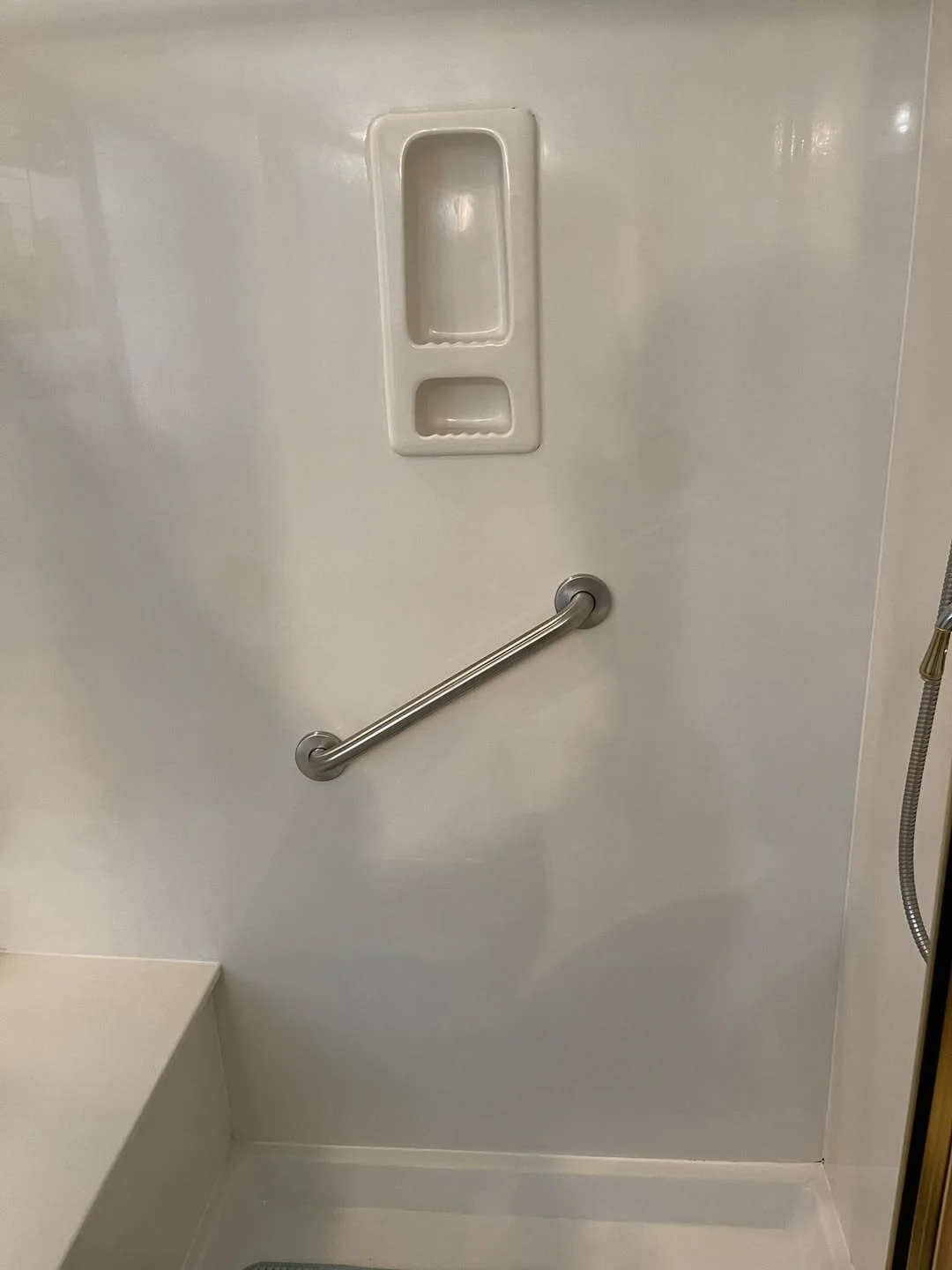
Grab bar placement should support the way the person actually enters, exits, turns, and moves within the shower.
5 Questions to Ask Before Grab Bars Are Installed
How does the way I move determine where a grab bar should be placed?
Grab bar placement should match how you actually stand, turn, step, reach, and transfer in that specific space. The “right” location is different for different people.
How do I know the correct height, angle, and length for my needs?
Those decisions should be based on your movement, reach, strength, balance, and how you use the bathroom—not just a standard measurement or convenient wall location.
How do my health and mobility needs affect where support should be placed?
Changes in balance, strength, coordination, joint movement, or the way you transfer can all affect where support is most useful. That is why placement should be considered before installation begins.
How do you determine which areas of my home need grab bar support the most?
Start with the places where movement is becoming harder or where you need extra support—such as getting in and out of the shower, standing from the toilet, stepping over a threshold, or changing direction in a tight space.
How do I know how many grab bars I actually need?
More is not automatically better. The goal is to identify where support will actually help the way you move and avoid adding bars that do not serve a useful purpose.
Before anyone drills into your walls, know what questions to ask.
Ready to Get Your Grab Bars Installed the Right Way for You?
Start with a free 10-minute call. We’ll talk about what you need and how we can help.
Prefer to talk now? Call or text (713) 364-5063