
THE MOBILITY-TO-FALL CYCLE™
Mobility Is More Than Walking
Mobility is how you move through daily life at home.
It includes walking, standing, turning, balancing, stairs, transfers, bathing, toileting, getting in and out of bed, and using a cane, walker, or wheelchair.
When mobility changes, the home can start to feel harder, less safe, or less accessible.
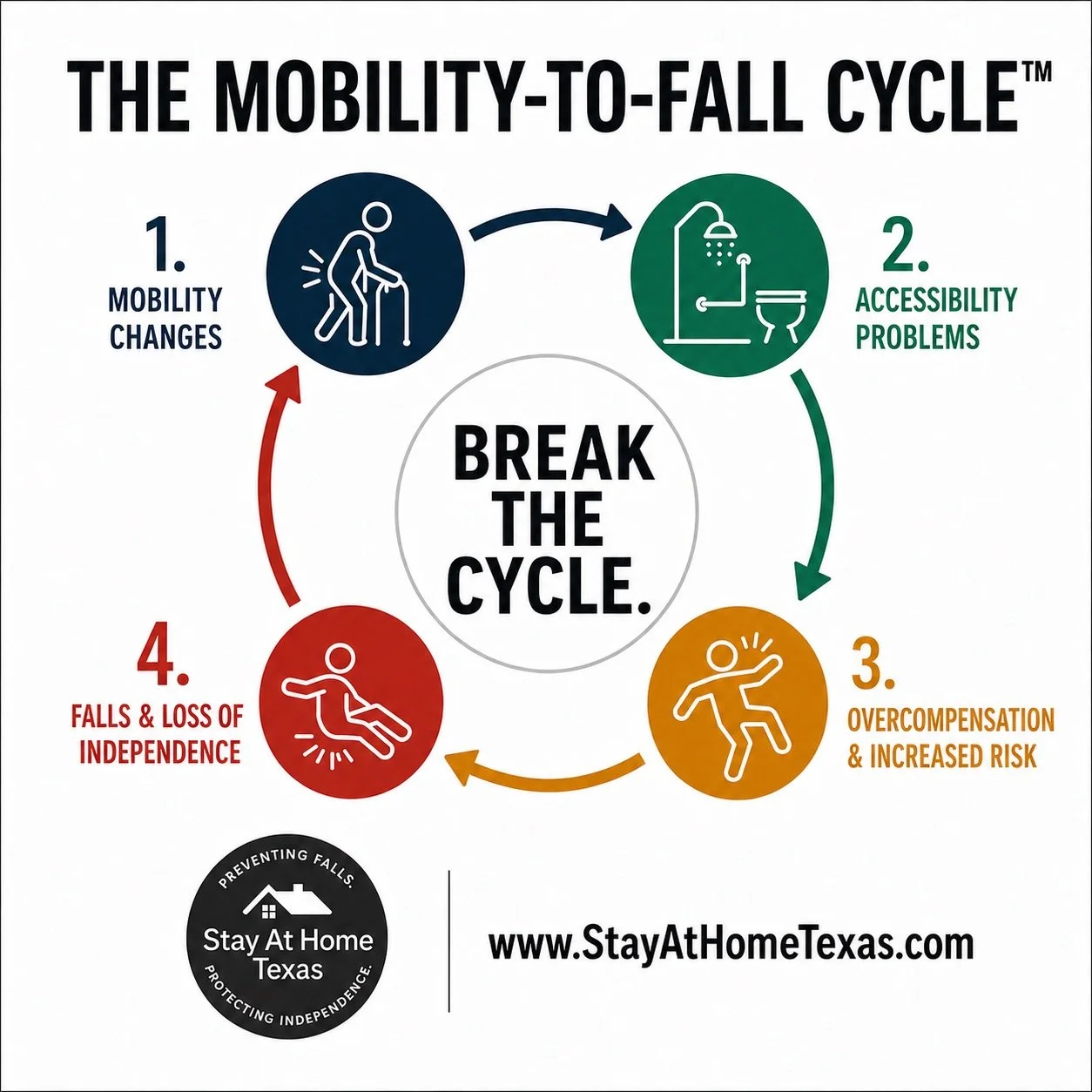
When Mobility Changes, Daily Life Changes
STAGE 1
A change in mobility means someone is no longer moving as safely, easily, or independently as they once did.
It may show up as slower walking, shuffling feet, trouble standing, difficulty with stairs, reduced balance, fatigue, pain, or needing a cane, walker, or wheelchair.
These changes can seem small at first, but they often change how a person moves through the home.
Accessibility Starts to Change
STAGE 2
Accessibility means how safely and easily someone can use the parts of their home they need every day.
That includes getting into the bathroom, stepping into the shower, using the toilet, moving through doorways, reaching cabinets, using stairs, and getting in or out of the home.
When mobility changes, these everyday spaces can become harder to access. That is when people often start adjusting how they move to make the home work.
Unsafe Workarounds Can Become Normal
STAGE 3
When the home no longer supports the way someone moves, they often find ways to make daily tasks work anyway.
That may mean reaching too far, pulling on furniture, rushing, twisting, stepping around obstacles, or using unstable surfaces for support.
At first, these shortcuts may feel like problem-solving. Over time, they can become habits that increase fall risk.
Fall Risk Begins to Increase
STAGE 4
When unsafe workarounds become part of daily life, balance and control can become harder to maintain.
A person may be moving with more effort, less stability, less confidence, or more dependence on furniture, walls, or caregivers.
This is when fall risk can begin to increase — often before a fall ever happens.
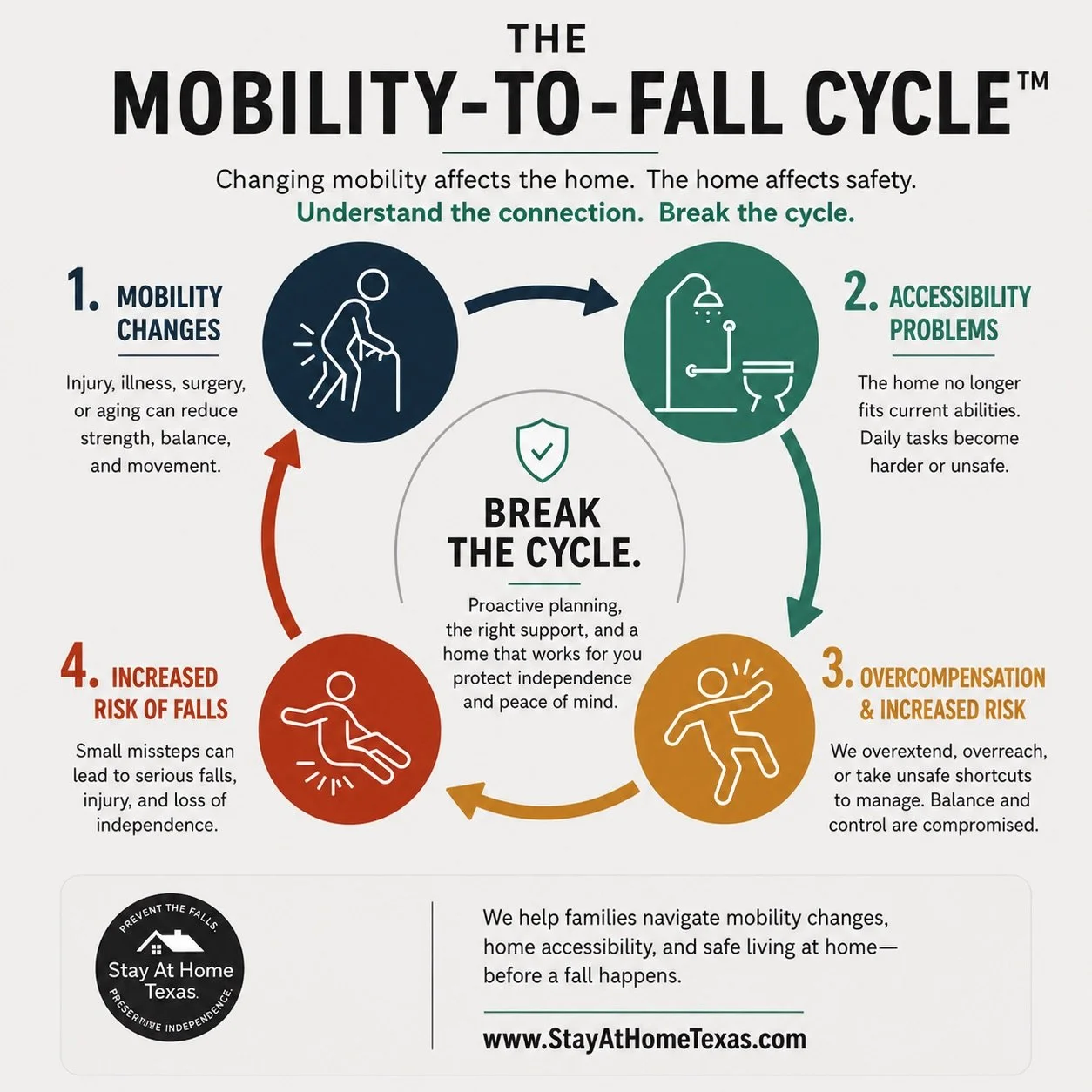
The Cycle Can Be Interrupted
BREAKING THE CYCLE
The Mobility-to-Fall Cycle™ does not have to continue until someone falls.
The best time to act is when everyday movement starts to feel harder, slower, less steady, or less safe.
Recognizing these changes early gives families a chance to make better decisions before unsafe habits become normal.
STEP 1
Stay Safely Active
Staying active helps protect strength, balance, endurance, and confidence.
Even simple movement can help someone keep doing everyday tasks like walking through the home, standing from a chair, using stairs, and moving safely through daily routines.
Activity should feel safe, realistic, and appropriate for the person’s current ability. When unsure, ask a healthcare provider where to start.
STEP 2
Recognize Changes Early
Small changes are easy to explain away.
“I’m just tired.”
“I’ll be fine.”
“I’ve always done it this way.”
But the way someone walks, stands, climbs stairs, bathes, reaches, or moves through the home can show that mobility is changing before a fall happens.
The goal is to notice those changes early — before the home starts feeling unsafe.
Use Your Resources
You do not have to figure out fall prevention, mobility changes, or home safety alone.
Doctors, physical therapists, caregivers, family members, and trusted professionals can help you understand what is changing and what support may be needed.
The goal is to ask questions early — before a fall, injury, or rushed decision forces the conversation.
STEP 3
Home Mobility Planning
Home Mobility Planning means looking at the places where everyday movement happens.
That includes walking paths, stairs, bathrooms, lighting, transfers, entry access, and the areas where someone sits, stands, reaches, and moves.
The goal is to make the home easier and safer to move through before a fall, injury, or rushed decision forces the conversation.
STEP 4
When You’re Unsure Where to Start
Some home safety changes are simple. But when mobility changes, the question is often bigger than one grab bar, ramp, or shower chair.
Home Mobility Planning helps families understand what matters first, what can wait, and what options may support safer daily life at home.
Home Mobility Planning™ Checklist
Use this checklist to start identifying areas of the home that may need discussion, observation, or planning. It can help families think through entry access, toilet safety, shower access, bed transfers, stairs, walking paths, caregiver help, and daily routines.
How Stay At Home Texas Can Help
Stay At Home Texas provides Doctor of Physical Therapy-led home safety consultations in Houston for families navigating mobility changes, accessibility concerns, fall risk, and aging in place decisions.
We help you understand your options before spending money on equipment, remodeling, or modifications.
Contact Us to Learn How We Can Help
Need to ask questions now? (713) 364-5063