
Coming Home From Rehab? The Home May Not Be Ready.
After a rehab stay or hospital discharge, mobility often changes. Walking, balance, transfers, shower safety, stairs, and endurance may not be the same as before.
That means the home may create new risks — even if it felt safe before.
A home safety and mobility planning visit can help Houston families understand what may need to change before returning home becomes harder, riskier, or more overwhelming.
What Families Often Overlook After Rehab
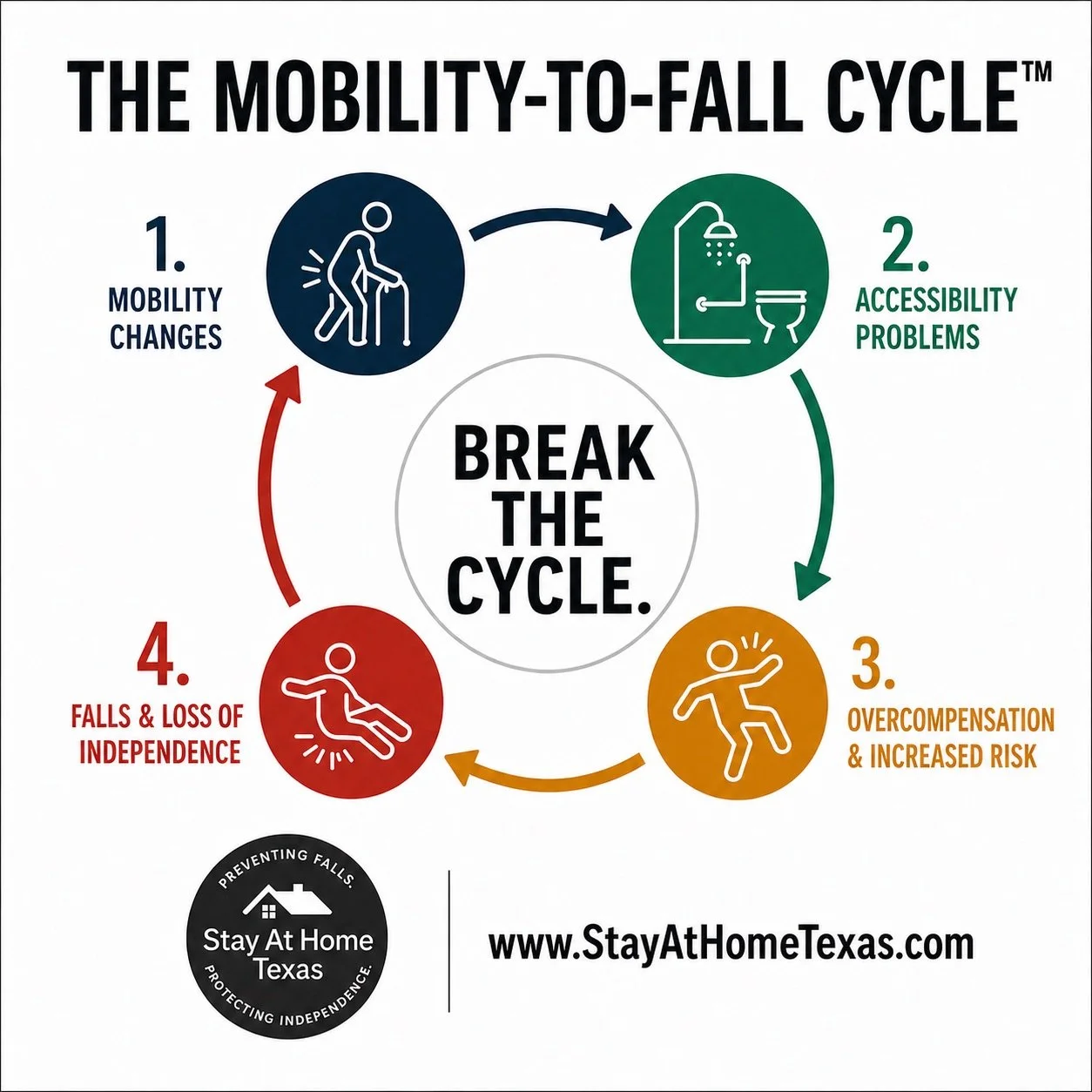
Many homes are not prepared for changes in mobility, balance, endurance, or bathroom safety after a hospital stay or rehabilitation program. Families often focus on equipment first, but entry access, flooring, lighting, bathroom layout, and everyday movement through the home can create unexpected fall risks.
We help Houston families understand what changes actually improve safety, accessibility, and confidence at home before equipment, remodeling, or rushed home changes are made.
Common Situations Families Face Before Coming Home
Families often reach out when someone is coming home after rehab or a hospital stay and they are not sure what the home now needs.
These are the kinds of questions the Home Mobility Planning™ Checklist can help families begin to organize.
Start the Home Mobility Planning™ Conversation
After rehab or a hospital stay, families are often told to prepare the home — but they are not always told what questions to ask.
The Home Mobility Planning™ Checklist is a simple conversation guide to help you think through what may need discussion, observation, or planning before someone returns home or continues living safely at home.
It helps families look at the areas that matter most: entering the home, toilet access, shower safety, bed transfers, stairs, walking paths, caregiver help, and what needs to work safely on day one.
Doctor-Led Home Safety Guidance

Stay At Home Texas provides independent home safety and accessibility guidance led by a Doctor of Physical Therapy and Certified Aging-in-Place Specialist.
We help families understand how mobility, balance, bathroom safety, entry access, caregiver support, and daily movement through the home affect safety and independence after rehab or hospitalization.
Our role is not to sell products or remodeling. Our role is to help families make informed decisions before changes are made.
What You Need to Know Before They Come Home
Before someone returns home after rehab or hospitalization, families need to understand more than what equipment to buy.
You need to know whether the home supports the way they move now.
Can they enter the home safely? Can they get to the bathroom? Can they shower? Can they get on and off the toilet? Can they move through the home with a walker, cane, wheelchair, or caregiver? What needs to work safely on day one?
A home safety consultation helps families answer those questions before discharge decisions, equipment purchases, grab bar placement, or remodeling decisions are made.
Where Home Care May Help
After rehab or hospitalization, some families may need extra help at home.
Home care can help with non-medical support such as bathing, dressing, meals, reminders, supervision, errands, companionship, and daily routines.
But even with help in the home, the house still needs to support the way someone moves. Bathrooms, stairs, entryways, walking paths, equipment, and caregiver space can all affect whether daily care is safe and realistic.
Home care can support the person. Home Mobility Planning™ helps families understand whether the home is ready to support them.
Preparing a Home After Rehab Starts With Understanding the Home
Stay At Home Texas helps Houston families make safer, clearer decisions about mobility, accessibility, fall prevention, and home safety before major changes are made.
Prefer to talk directly? Call or text us at (713) 364-5063