Prevent Falls at Home Before They Happen

houston-home-fall-prevention-grab-bar.jpg

Fall prevention is not just about avoiding accidents

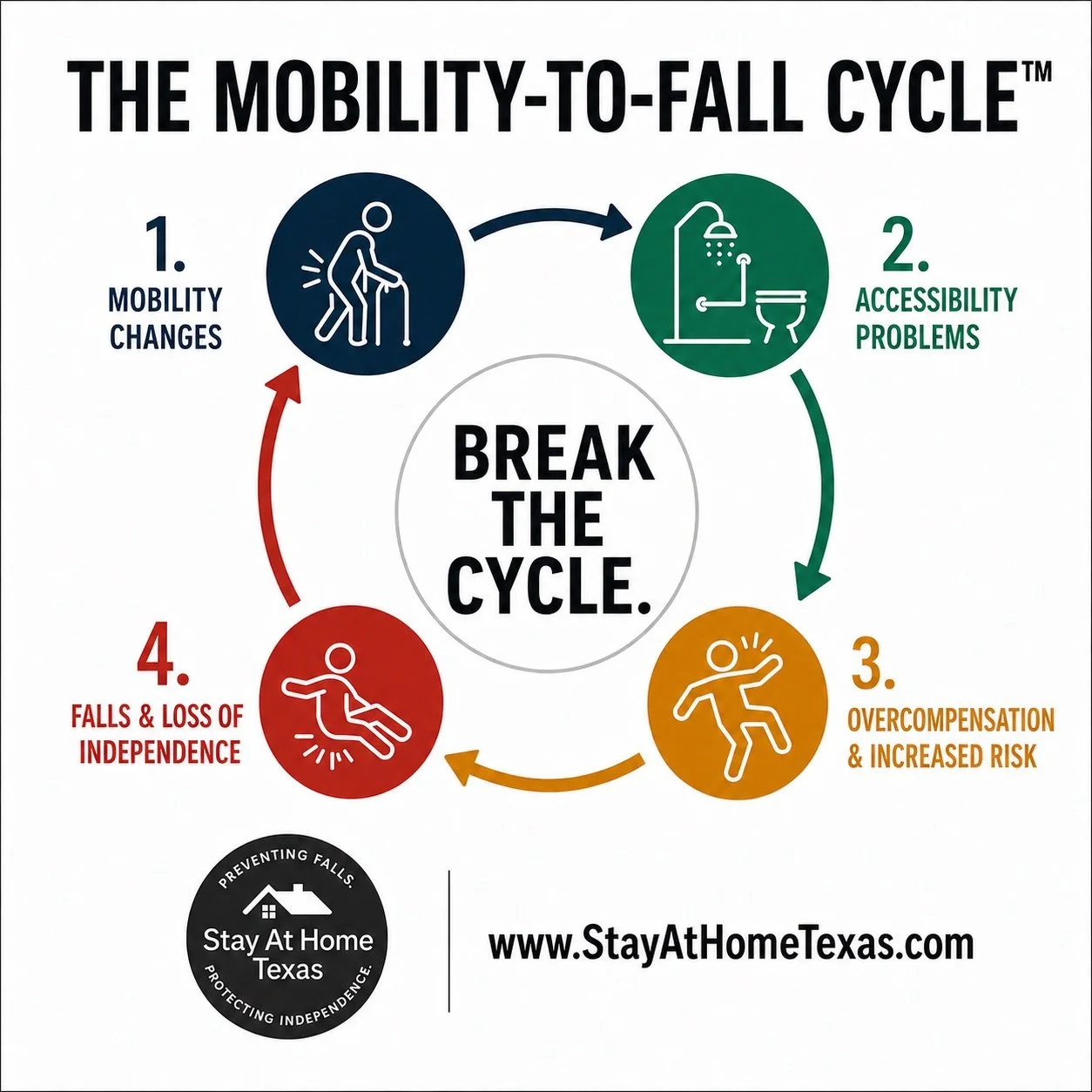
It’s about understanding how mobility, accessibility, and the home environment interact over time.

As mobility changes, everyday activities can become harder: • Getting in and out of the shower • Navigating stairs safely • Moving through narrow spaces with a walker or wheelchair • Reaching frequently used areas of the home • Managing slippery flooring or poor lighting

When accessibility challenges increase, fall risk often increases with them.

Many homes in Houston were never designed for long-term mobility or aging-in-place needs, which means small environmental issues can quietly become major safety concerns over time.

Our role is to help families identify those risks early and understand what changes actually improve safety before larger decisions become necessary.

Fall Prevention in Houston Homes: What Actually Reduces Risk

Fall prevention isn’t just about being careful — it’s about understanding where risk actually exists inside a home.

In Houston homes, fall risk is often influenced by a combination of layout, surfaces, lighting, and how a person moves through their daily routines.

Many families focus on obvious hazards, but the most common risks are often built into the way a home is used.

  • Bathrooms with slippery surfaces and poor support points

  • Transitions between rooms or flooring types

  • Inadequate lighting in hallways, bedrooms, and entryways

  • Stairs without proper railings or visibility

  • Frequently used areas that require excessive reaching, bending, or turning

Identifying these risks early allows for targeted changes that significantly reduce the likelihood of falls — without unnecessary modifications.

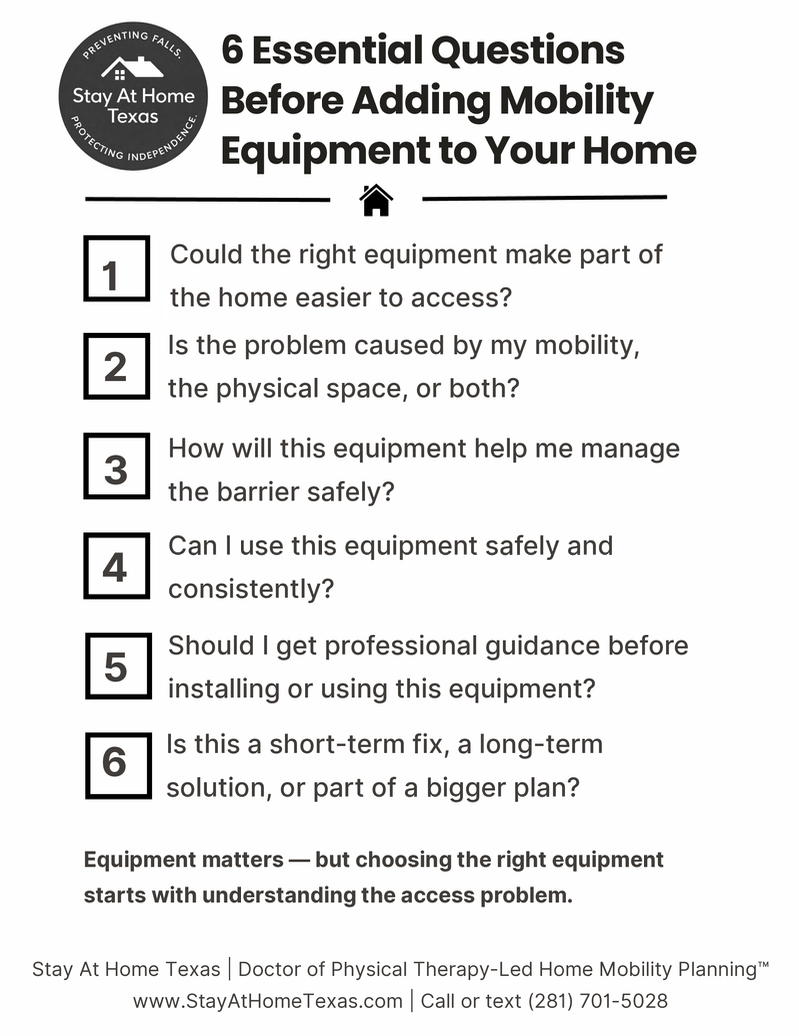
Before You Make Changes, Read This!

If you're considering making changes to your home, start here.

This guide shows what actually matters before remodeling or installing anything—so you don’t waste money on the wrong solutions.

Common Fall Risks We See in Houston Homes

  • Bathrooms without properly placed grab bars (or bars installed in the wrong location)

  • Step-downs, thresholds, or uneven flooring between rooms

  • Poor lighting in hallways, bathrooms, and entryways

  • Slippery bathroom flooring, unsecured rugs, or changing floor surfaces

  • Home layouts that make movement with walkers, canes, or wheelchairs more difficult

How Fall Prevention Starts at Home

Fall prevention isn’t about adding equipment everywhere — it’s about understanding how your home supports the way you move day to day.

Many Houston homes have unique layouts and materials that can increase fall risk if not properly evaluated. Environmental factors like lighting, flooring transitions, bathroom layouts, entryways, and accessibility barriers can quietly increase fall risk over time.

Identifying these early allows for targeted, effective changes that improve safety and independence — without unnecessary modifications.

A home safety consultation helps you understand what actually matters in your space before making changes.

Many Houston homes were never designed with long-term mobility, accessibility, or fall prevention in mind.

As movement, balance, or vision changes over time, everyday features like bathrooms, flooring transitions, entryways, and lighting can quietly become safety concerns.

Understanding these risks early allows families to make informed decisions before falls, injuries, or major remodeling become necessary.

Why Fall Risk Is Common in Houston Homes

These aren’t flaws — they’re simply features that were never intended to support aging in place, and proper grab bar placement is one of the most effective ways to reduce fall risk when used correctly.

Understanding how these factors interact with daily movement is the first step toward making effective, meaningful changes.

Why Fall Prevention Is More Than Just Products

Grab bars, railings, lighting, and other safety features only work when they are placed intentionally and designed around how a person actually moves through the home.

Many falls happen because safety features are added too late — or installed in ways that don’t provide meaningful support.

A home safety consultation helps identify environmental fall risks and ensure changes improve safety, accessibility, and long-term function throughout the home.

Not sure what changes would actually make your home safer?

A home safety consultation provides clear, professional guidance based on how your home is used every day.

Most people reach out before making changes — not after.

Schedule a Home Safety Consultation

Our Approach to Fall Prevention in Houston

Stay At Home Texas provides doctor-led home safety consultations focused on understanding how mobility, accessibility, and the home environment interact.

Led by a Doctor of Physical Therapy, consultations help families identify areas of fall risk within the home, understand how movement and daily routines interact with the space, and plan meaningful safety changes before problems become urgent.

The goal is to help families make informed decisions about accessibility, safety, and long-term living at home before expensive modifications or larger care decisions become necessary.

We do not install products or perform construction.

Our role is to provide independent guidance so families can make confident decisions before spending money or remodeling.

Serving Houston Homeowners

We provide doctor-led home safety consultations for homeowners and families throughout Houston and surrounding communities.

Every home is different, and safety planning should reflect how the space is actually used day to day.

No installation. No construction. Just independent guidance focused on safety, accessibility, and long-term living at home.

And reduce the heading size one notch.

What Should You Do Next?

If you are unsure what needs to change, our home safety and mobility planning visit helps identify what matters now, what can wait, and what may need professional guidance before money is spent.

Call or text Stay At Home Texas at (281) 701-5028 to schedule a home safety consultation.