
Getting In and Out of the Home Safely
Many families begin exploring ramps and home accessibility after a hospitalization, rehabilitation stay, fall, or major mobility change. Suddenly, getting in and out of the home safely becomes one of the most important daily challenges.
But choosing a ramp or access solution is not always as simple as buying a product online. The right solution should consider mobility, endurance, wheelchair use, caregiver support, safety, and how the entrance functions in real life for the person using it.
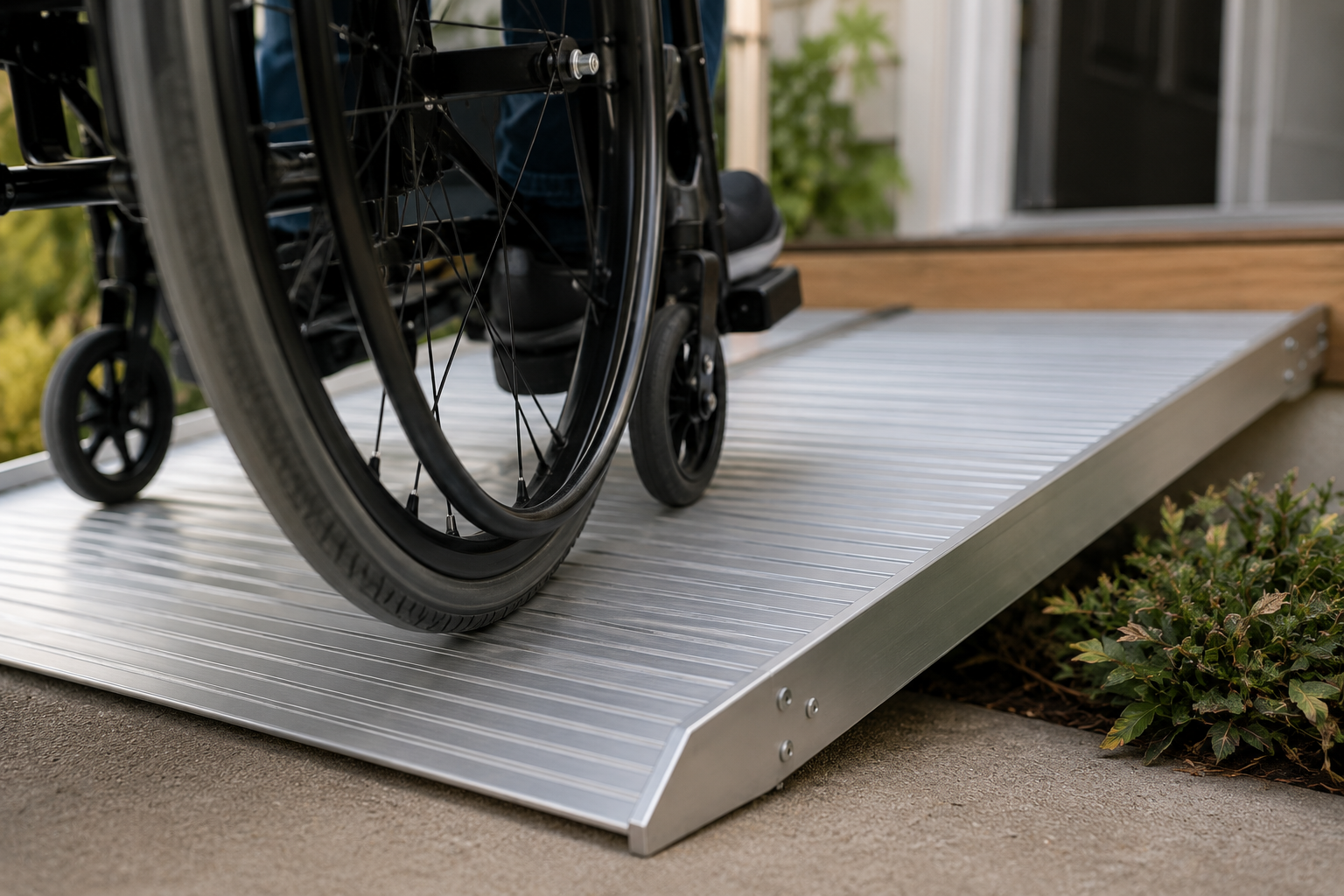
Not Every Ramp Solution Is the Same
When families begin looking for a ramp, they are usually trying to solve one urgent problem: getting safely in and out of the home.
But accessibility is rarely one-size-fits-all.
The type of wheelchair being used, strength, endurance, caregiver support, slope, turning space, doorway layout, and daily routines can all affect what kind of solution actually works.
The goal is not simply adding a ramp. The goal is creating safe, reliable access that supports real daily mobility.
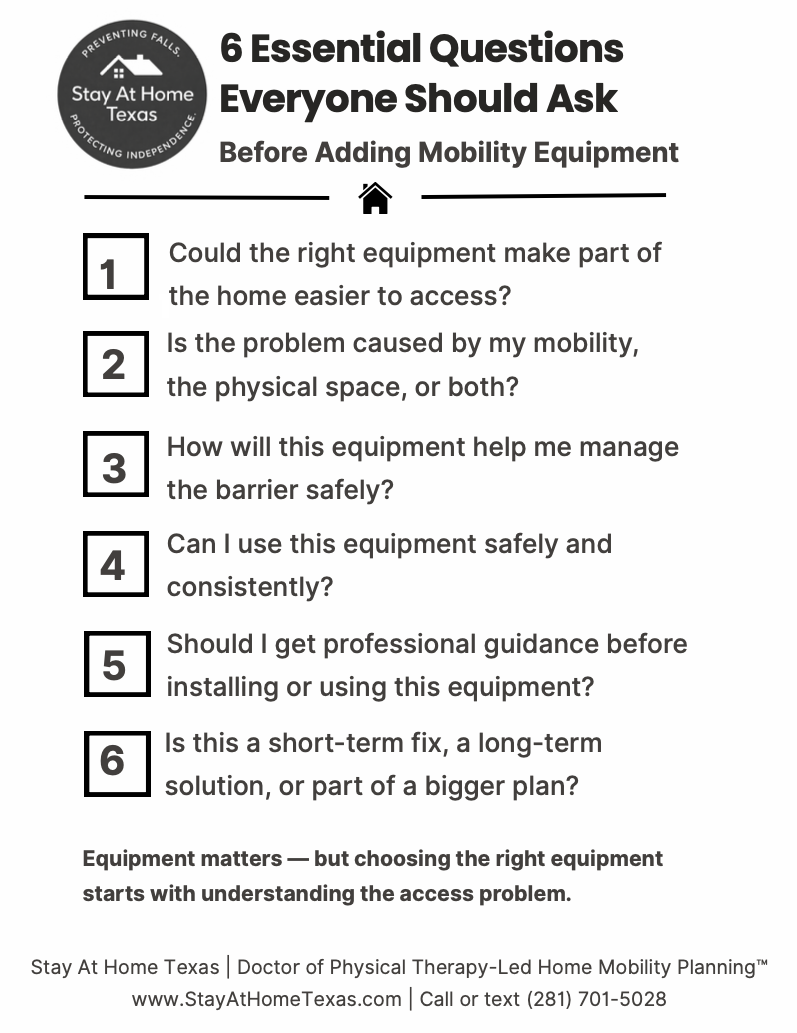
Ask the Right Questions Before Adding Mobility Equipment
Mobility equipment can help make the home easier to access, but only when it fits the person, the home, the caregiver, and the daily routine.
Before adding a ramp, wheelchair, lift, shower chair, commode, transfer device, or other equipment, ask what problem the equipment is actually trying to solve.
The right equipment should support safer movement, reduce barriers, and fit the home environment — not create new problems.
What Families Often Don’t Realize About Ramps
Many people assume a ramp is simply about getting over steps. But in reality, accessibility and safe home access involve much more than the ramp itself.
Slope, turning space, endurance, wheelchair type, weather exposure, caregiver assistance, doorway layout, and how someone enters and exits the home every day can all affect safety and function.
A solution that works well for one person may create new challenges for someone else. That is why accessibility planning should focus on the individual, the home, and how mobility changes affect daily life over time.
Walker, manual wheelchair, power chair, or transport chair.
How steep the ramp feels matters during real daily use.
Safe access depends on more than getting over the steps.
The setup should work for the person and anyone helping them.
Some needs change after recovery, surgery, or rehab.
Doorways, landings, surfaces, and approach angles all matter.
The Right Solution Depends on the Situation
Some accessibility needs are temporary after surgery, hospitalization, or rehabilitation. Others may change gradually over time as mobility changes.
That is why home access planning should focus on the individual person, their mobility, and how they function in the real environment every day.
In some situations, a temporary solution may make sense. In others, families may benefit from a more long-term approach that better supports safety, independence, caregiver assistance, and future mobility needs.
The goal is not simply installing a ramp — it is helping someone safely and confidently enter and exit the home.

How We Help Families Navigate Home Access Decisions
At Stay At Home Texas, we help families better understand mobility, accessibility, and home safety before major equipment or remodeling decisions are made.
Our role is not simply recommending products. We help families think through how the entrance, mobility needs, caregiver support, and long-term function all work together in real daily life.
Because every home and every mobility situation is different, the goal is to create access solutions that support safety, confidence, and independence — not just solve the steps temporarily.